This article provides educational information about how fault is determined in car accidents. It is not legal advice and does not create an attorney-client relationship. Consult with a qualified attorney regarding your specific situation.
Why Fault Matters After a Crash
Fault determines who is legally responsible for the harm caused by a car accident and, in most states, who is financially responsible for medical bills, lost wages, vehicle damage, and other losses. Understanding how fault gets decided, what evidence matters, and how insurance companies approach these questions helps you protect your rights after a collision.
Fault is not always obvious, even when a crash seems straightforward at first glance. Multiple parties can share responsibility, witnesses can disagree, and physical evidence can be interpreted differently by different investigators. Because so much financial responsibility depends on the fault determination, insurance companies and the parties involved often dispute it vigorously.
Fault-based versus no-fault states affect how these determinations matter practically. In fault-based states, the at-fault driver’s insurance generally pays for the other party’s losses. In no-fault states, your own insurance typically pays your initial medical expenses regardless of fault, though fault can still matter for claims beyond a certain threshold of injury or cost. Knowing which system applies to your accident affects how you should approach your claim.
How Fault Is Legally Determined
Negligence forms the legal foundation for most fault determinations. A driver is negligent when they fail to exercise the level of care a reasonably prudent driver would exercise under similar circumstances, and that failure causes harm. Common examples include speeding, following too closely, failing to yield, distracted driving, and driving while impaired.
Traffic law violations often serve as strong evidence of fault. Running a red light, failing to stop at a stop sign, making an illegal turn, or violating right-of-way rules can establish that a driver was negligent per se in many states, meaning the violation itself is treated as evidence of fault without requiring additional proof of unreasonable behavior.
Comparative and contributory negligence rules determine how fault is allocated when more than one driver contributed to a crash. Most states use some form of comparative negligence, allowing recovery reduced by your percentage of fault. A minority of states use contributory negligence, which can bar recovery entirely if you bear any fault at all. Understanding which rule applies in your state significantly affects your case strategy.
Multiple at-fault parties can exist in a single crash. A chain-reaction collision might involve one driver who caused the initial impact and another whose following distance made a secondary collision worse. Each party’s specific contribution to the harm may need to be separately established.
Evidence Used to Establish Fault
Police accident reports document the responding officer’s observations, statements from involved parties and witnesses, and often a preliminary opinion about contributing factors. While not always the final word on fault, police reports carry significant weight with insurance adjusters and can be difficult for a later account to overcome.
Photographs and video from the scene capture vehicle positions, damage patterns, skid marks, traffic signals, road conditions, and debris fields. Damage location and pattern on each vehicle often help reconstruct the sequence and direction of impact. Photograph everything as soon as safely possible after a crash, including wide shots of the overall scene and close-ups of specific damage.
Witness statements from people who saw the crash happen, and who have no stake in the outcome, can be powerful evidence, particularly when accounts from multiple independent witnesses align. Get names and contact information for witnesses at the scene whenever possible, since witnesses become harder to locate as time passes.
Dashcam and surveillance footage from the involved vehicles or from nearby businesses, traffic cameras, or residences can provide an objective record of exactly what happened. Footage should be preserved and secured quickly, since many systems overwrite recordings automatically after a short period.
Event data recorder information, sometimes called a vehicle’s “black box,” can show speed, braking, throttle position, and seatbelt use in the seconds before a crash. This data can confirm or contradict a driver’s account of what happened and is often central to disputed fault cases.
Vehicle damage and mechanical inspection can reveal impact angles, speed estimates, and mechanical conditions at the time of the crash. An independent inspection may be warranted when the cause of the crash is disputed or when a vehicle defect may have contributed.
Cell phone records can establish whether a driver was on a call or using an app at the time of the crash, supporting or refuting distracted driving allegations.
Common Multi-Vehicle Accident Scenarios
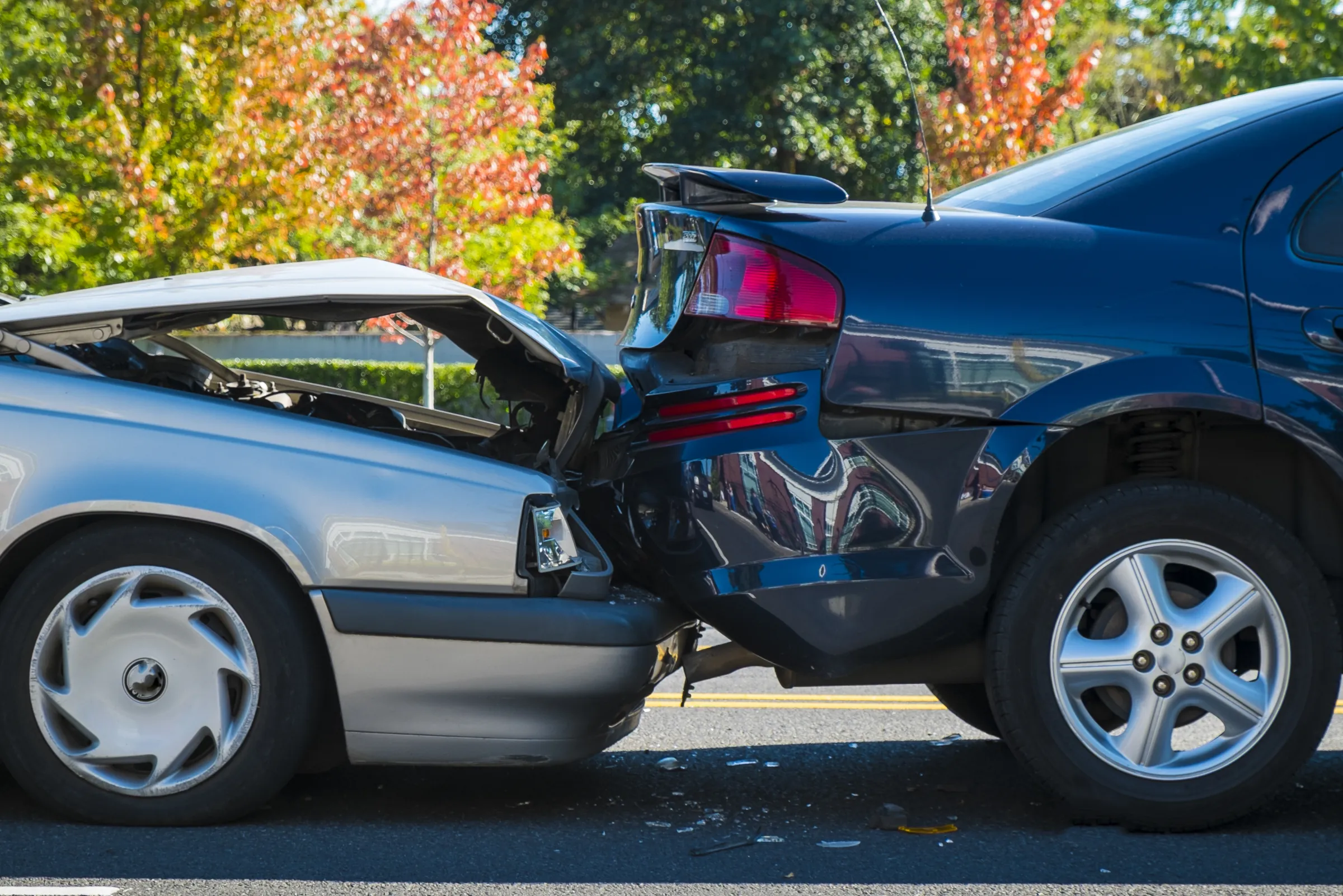
Rear-end collisions typically create a presumption that the rear driver was following too closely or not paying attention, but this presumption can be challenged with evidence of sudden unsafe stops, brake failures, or a chain-reaction pushed from behind.
Chain-reaction pileups on highways often involve several vehicles and require reconstructing the sequence of impacts to determine which driver’s actions started the chain and whether other drivers contributed by following too closely or failing to react appropriately.
Intersection collisions frequently turn on right-of-way rules, traffic signal timing, and which driver had the green light or the legal right to proceed. Traffic signal timing records and intersection camera footage are often critical evidence.
Left-turn accidents commonly place fault on the turning driver, who generally must yield to oncoming traffic, but exceptions exist when the oncoming driver was speeding, ran a red light, or the turning driver had a protected turn signal.
Lane-change and merging accidents often depend on which driver had already established their position in the lane and whether signals were used, both of which can be established through dashcam footage or witness accounts.
How Insurance Companies Approach Fault
Insurance adjusters investigate fault to determine how much their company owes, and their financial interest in minimizing payouts should be kept in mind throughout your dealings with them. Adjusters review police reports, take recorded statements, inspect vehicle damage, and sometimes conduct independent investigations.
Recorded statements requested by an insurance adjuster, including your own insurer’s adjuster, should be approached carefully. Statements can be used to assign you a share of fault based on how questions are phrased and how you answer them. Consider consulting an attorney before giving a detailed recorded statement, particularly to the other driver’s insurer.
Comparative fault allegations are common even in cases that seem straightforward. Insurers frequently assign some percentage of fault to the other driver as a negotiating tactic, since doing so reduces the amount they must pay. Be prepared to respond to these allegations with your own evidence.
Multiple insurers may be involved when several vehicles and drivers are part of a crash, and each insurer will be advocating for a fault allocation that minimizes its own policyholder’s exposure. This can make multi-vehicle claims more complex to resolve than two-car accidents.
Steps to Protect Your Position on Fault
Call the police and get a report for any accident involving injury or significant damage. An official report creates a contemporaneous record that becomes harder to dispute later.
Document the scene thoroughly before vehicles are moved, if it is safe to do so, including photographs of vehicle positions, damage, road conditions, traffic signals, and any relevant signage.
Exchange information with all involved drivers, including names, contact information, insurance details, and license plate numbers, and get contact information from any witnesses.
Seek medical attention promptly, even for injuries that seem minor at first, since some injuries do not produce noticeable symptoms right away and delayed treatment can be used to argue your injuries were not caused by the crash.
Avoid admitting fault at the scene or in conversations with insurance adjusters. Statements like “I didn’t see them” or “I’m sorry” can be used later as admissions, even when made reflexively out of politeness or shock.
Preserve evidence including damaged vehicle parts, clothing worn during the crash, and any dashcam footage before it is overwritten or lost.
Consult with an attorney before accepting a settlement or signing any statement about fault, particularly in cases involving significant injury, disputed fault, or multiple vehicles.
When Fault Disputes Require Legal Help
Some fault disputes are resolved quickly and without significant disagreement, but others require substantial investigation and advocacy to reach a fair outcome.
Serious injuries raise the stakes of a fault dispute considerably, since the amount of compensation at issue is often much larger and insurers have more incentive to contest fault aggressively.
Disputed liability where drivers give conflicting accounts, where fault is shared among multiple parties, or where a vehicle defect may have contributed alongside driver error, often benefits from an attorney’s ability to gather expert accident reconstruction evidence and present a coherent theory of the case.
Commercial vehicles and multiple insurers add complexity, since trucking companies, rideshare platforms, and other commercial defendants often have teams of adjusters and attorneys working to minimize their exposure from the outset.
Comparative fault fights over percentages can dramatically change your recovery, since even a modest increase in your assigned fault percentage can significantly reduce what you ultimately receive in a comparative negligence state.
This educational article provides general information about how fault is determined after car accidents and is not intended as legal advice for any specific situation. Fault rules and procedures vary significantly by state. Anyone involved in a disputed motor vehicle accident should consult with a qualified attorney who can evaluate the specific facts of their case and provide personalized legal guidance.
Ready to Discuss Your Case?
Contact us today for a free, confidential consultation. Call 855-758-7949 or visit shatterfirm.com/contact. No fees unless we win.